
Actives Family · 4 SKUs
Cosmetic active ingredients
Source-priced whitening, brightening and anti-aging actives — every batch released on triple-phase analysis with a COA. Niacinamide to bakuchiol, quoted with MOQ, lead time and terms before you ask.
 Confirm current availabilityActives
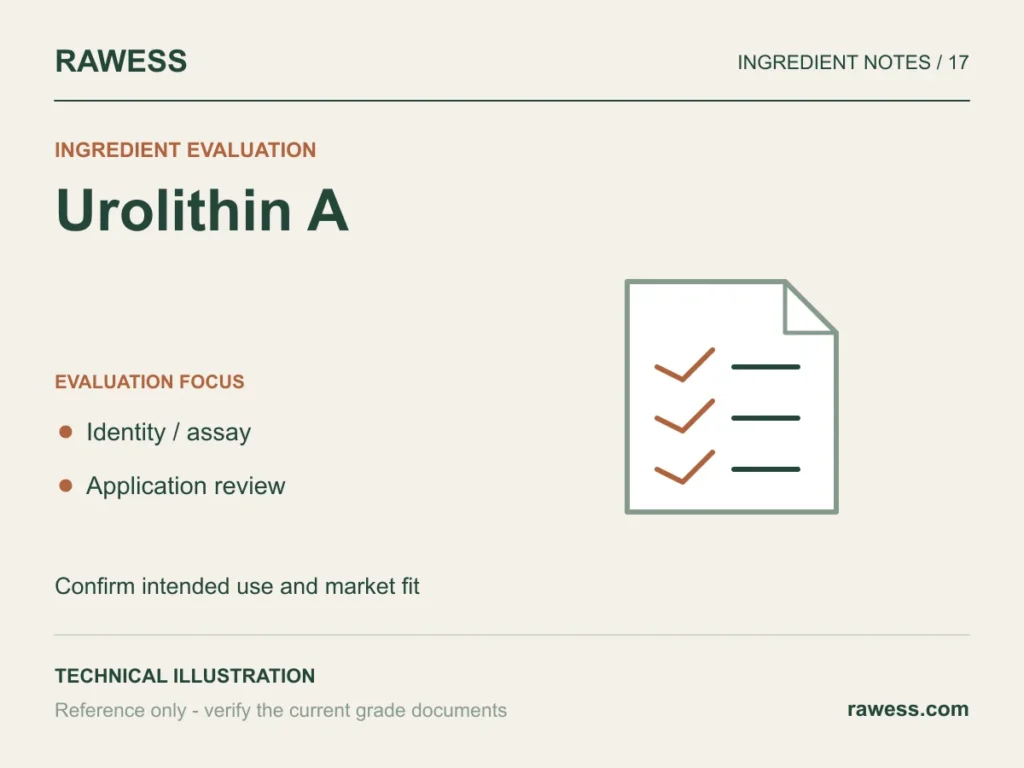
Urolithin A
Urolithin A · CAS 1143-70-0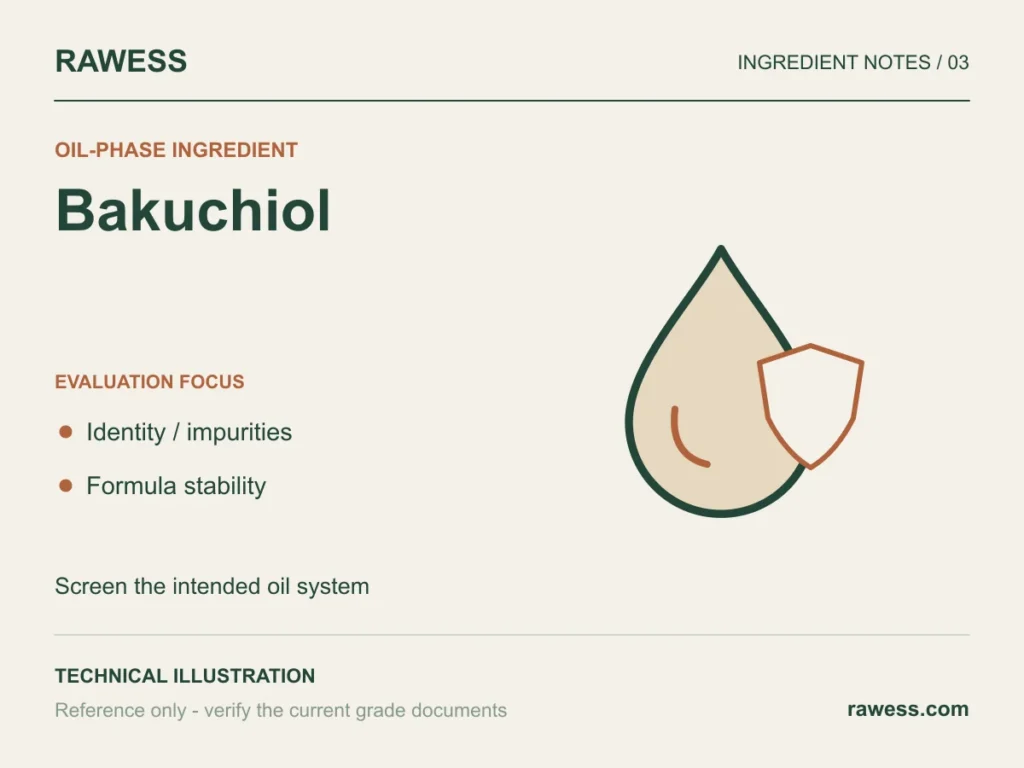 Confirm current availabilityActives
Bakuchiol
Bakuchiol · CAS 10309-37-2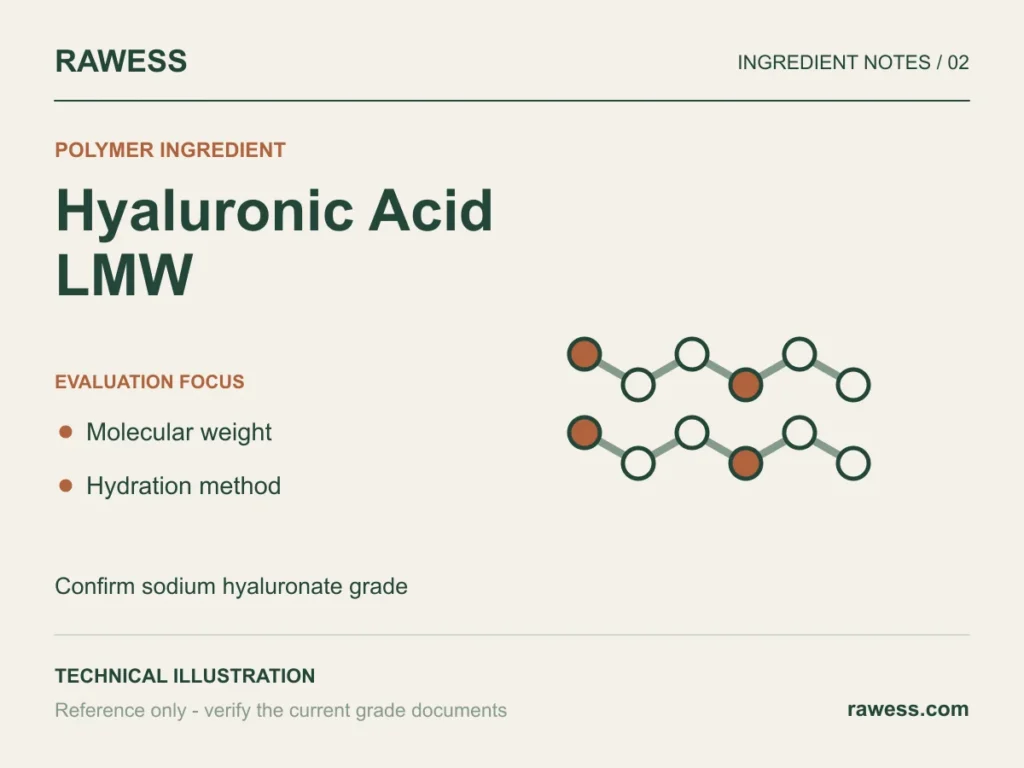 Confirm current availabilityActives
Hyaluronic Acid LMW
Sodium Hyaluronate · CAS 9067-32-7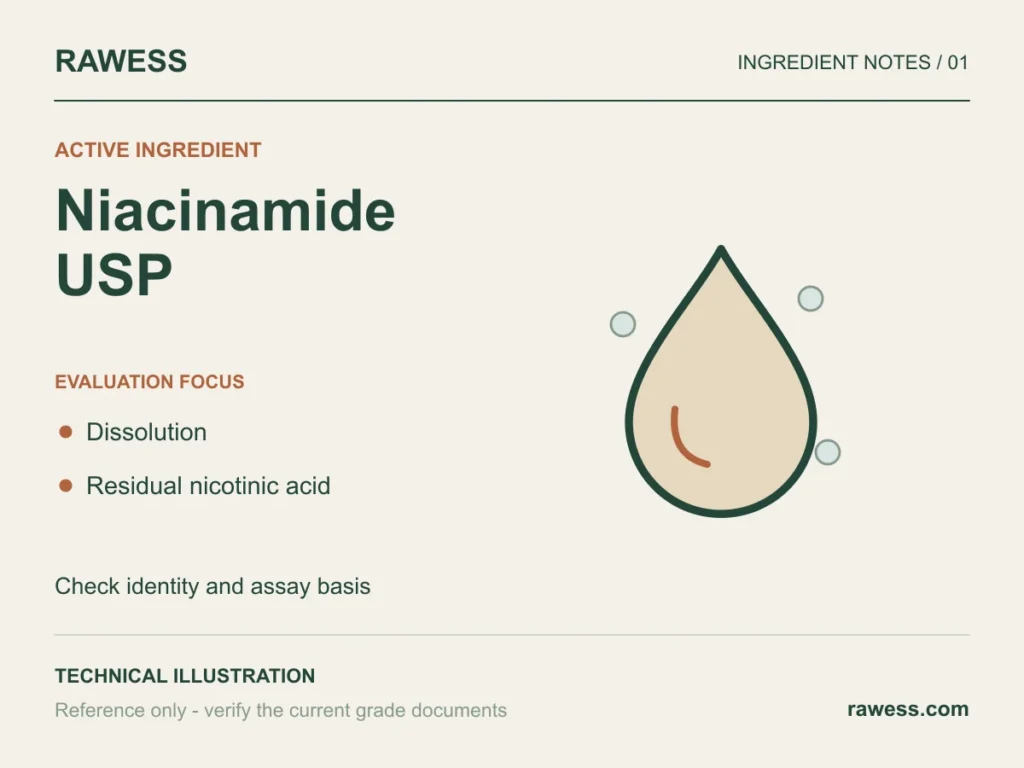 Confirm current availabilityActives
Niacinamide USP
Niacinamide · CAS 98-92-0 Confirm current availabilityActives
THD Ascorbate
Tetrahexyldecyl Ascorbate · CAS 183476-82-6How to source
Pick the active by application.
Match the SKU to the formula goal, then to the P&L: high-assay staples for scale, premium actives for margin. Every figure below is published on the quote.
Niacinamide USP for broad-spectrum brightening at scale; THD Ascorbate for stable, oil-soluble vitamin C in premium serums.
Bakuchiol delivers retinol-like renewal without the irritation profile — a proven natural alternative for "clean" positioning.
Hyaluronic Acid LMW is the water-binding workhorse — cold-chain shipped to protect molecular weight integrity.
Purchasing questions
Use these answers to prepare qualification and quotation requests. Availability of documents, certifications and commercial options must be confirmed for the offered grade and order.
How should I compare water-soluble and oil-soluble actives?
Match the supplied form to the phase and processing conditions, then test actual dissolution or dispersion. INCI alone does not predict finished-formula clarity or stability. Ingredient Knowledge Center
What purity or active content applies, and is the grade USP, EP, JP or FCC?
Ask for the assay method, units and basis: dry basis, as supplied, chromatographic purity or marker content. A product name or typical value does not prove monograph compliance. Specify the required pharmacopoeia and edition, then request evidence for the offered grade and lot. Quality and document review
What pH, temperature, light and storage stability data should I request?
Ask for grade-specific TDS guidance and any stability data with test conditions, packaging and acceptance criteria. Raw-material shelf life does not establish stability in your formulation. Evaluate processing heat, pH, light, oxygen and packaging in the finished product under your proposed conditions. Ingredient Knowledge Center
What use level, compatibility guidance and formulation support can I request?
Request the current grade-specific TDS, starting use range and incorporation instructions, plus any application examples available. Disclose pH, processing temperature, phase, electrolytes and other actives. Confirm solubility or dispersion, preservation and packaging in trials; a starting formula is not validation of your finished product. Ingredient Knowledge Center
Can ingredient efficacy or clinical data support my finished-product claims?
Ask which reports are available and compare material identity, concentration, route, formulation, population and endpoints. In-vitro, oral and topical clinical evidence are not interchangeable. Published research on another material does not prove efficacy of the supplied lot or your formula. Substantiate finished-product claims with relevant evidence. Ingredient Knowledge Center · EU common criteria for cosmetic claims
Is this grade vegan or cruelty-free, and which allergen information is available?
Request separate, dated statements for animal-derived inputs, processing aids, animal-testing policy and allergen content or carry-over. Confirm the scope, site and supplied composition. For EU fragrance-allergen assessment, use the applicable expanded Annex III requirements, not only an older 26-allergen checklist. These claims cannot be assumed across the portfolio. Ingredient Knowledge Center · EU fragrance-allergen amendment
Is the ingredient suitable for the EU, China, the US or ASEAN?
Share the destination, finished-product category, intended use and concentration. Ask for the grade-specific regulatory status and supporting documents for REACH obligations, China IECIC, US requirements and the ASEAN Cosmetic Directive as relevant. An inventory entry or REACH status alone is not finished-cosmetic approval. Ingredient Knowledge Center · EU Cosmetics Regulation
Agascalm™ and other stress-redness actives: how the claim is assessed
Most visits that arrive looking for this ingredient carry the same question: what does an active sold for stress-induced redness actually demonstrate, and how should it be evaluated before it goes into a formula? RAWESS does not supply the branded grade named in those searches and makes no performance claim about it. The checks below are the ones we apply to any ingredient positioned this way.
A trade name is not a specification
Agascalm™ is a trademark of Provital S.A. Published listings for that grade describe an Agastache mexicana (Mexican giant hyssop) flower, leaf and stem extract carried in propanediol and glycerin, with a recommended use level in the low single-digit percentage range. Those details identify the material; they do not establish its performance. Confirm them on the current technical data sheet for the grade being offered, and note that a diluted extract means the percentage in the formula is not the percentage of plant material.
What to request when the claim is stress-induced redness
| Request | Why it changes the decision |
|---|---|
| Full INCI and carrier composition | The extract is usually supplied in a solvent system; the use level refers to the supplied mixture, not to plant solids. |
| Standardization basis | Plant part, extraction solvent and marker definition decide whether two lots are the same material. |
| Test model | Reconstructed epidermis, skin explant and clinical facial studies answer different questions. |
| Endpoint and instrument | Chromametry a* values, Mexameter readings and visual grading are separate measurements and are not interchangeable. |
| Vehicle and use level tested | A result obtained in a basic cream does not transfer to a gel, a serum or an anhydrous base. |
| Population and duration | Eight weeks in thirty volunteers is not twelve weeks in a hundred, and the panel baseline matters. |
| Permitted claim wording | "Soothes", "reduces the appearance of redness" and "anti-couperose" carry different requirements in different markets. |
Where this sits among the actives we do offer
The four actives in the catalog are selected for a defined specification and a document trail, not for a claim word. Niacinamide USP is the usual starting point for barrier and tone work at scale; bakuchiol covers the retinol-alternative position; THD ascorbate is the oil-soluble vitamin C route. Each page lists assay basis, MOQ, lead time and packaging, and each links to the batch documents you should request.
If a stress-redness active is on your brief
Send the destination market, the formula format, the use level and the claim you intend to make. We will answer whether a listed grade fits that brief and say so plainly when it does not, including when the material you need is a third-party branded extract that we do not carry. Send the brief, or read how to select cosmetic active ingredients first.
Selection knowledge and product documents
Choosing a cosmetic active starts with ingredient identity, supplied form and the requirements of the finished formula. Compare materials against a technical brief before interpreting price or marketing claims.
How to Select Cosmetic Active Ingredients · Download product PDFs · Ingredient Knowledge Center
Buying an active in bulk? Urolithin A capsules: bulk MOQ, lead time and pricing shows how order minimums, fill weight and packaging decide what a per-kilogram quote actually covers.
Technical reading: Water-Soluble vs Oil-Soluble Cosmetic Actives
Water-Soluble vs Oil-Soluble Cosmetic Actives — Choose an incorporation route before comparing active prices: supplied form, carrier and your formula determine which screening tests matter.
Choose an active by specification, not by claim
An active-ingredient shortlist becomes useful when the same review questions travel from the family page to the product record, sample and lot documents. Compare identity, assay basis, supplied form, storage, formulation conditions and evidence limits before interpreting a marketing claim.
- Niacinamide USP: confirm assay basis, residual nicotinic acid, water content, particle form and the pH range of your system.
- Bakuchiol: compare HPLC assay, isomer profile, peroxide value, acid value, light/oxygen exposure and nitrogen-flushed packaging.
- THD Ascorbate: record the assay method, oil-phase incorporation, moisture and protection from heat, light and oxygen.
- Hyaluronic Acid LMW: match molecular-weight range, intrinsic viscosity, microbiology and hydration method to the intended formula.
- Urolithin A: separate identity and active-content verification from the topical safety and regulatory review required for the finished product.
Use the raw-material technical data checklist to write the request, the product PDF library for catalogue context and the quality and document review before approving a grade. For screening conditions, compare solubility and storage stability guidance.