
Botanicals Family · 4 SKUs
Botanical extracts
Carbon-neutral solvent extraction and HPLC-verified markers — centella, green tea, licorice and rosemary, built for clean-label positioning and quoted with full B2B terms.
 Confirm current availabilityBotanicals
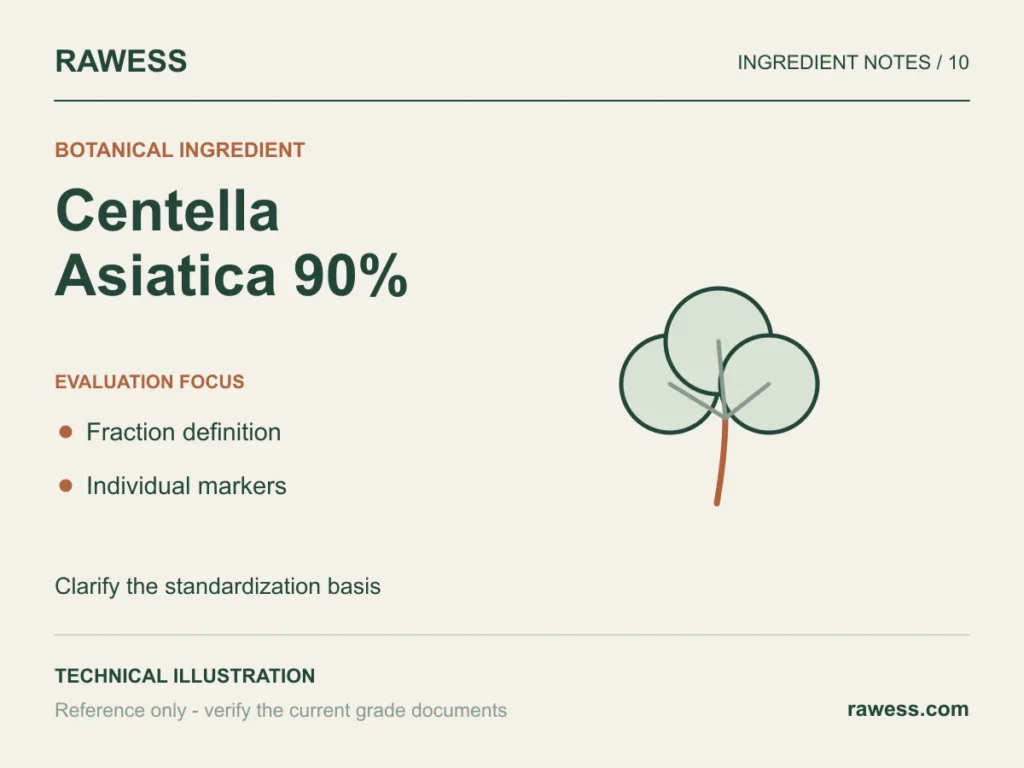
Centella Asiatica 90%
Centella Asiatica Extract · CAS 84696-21-9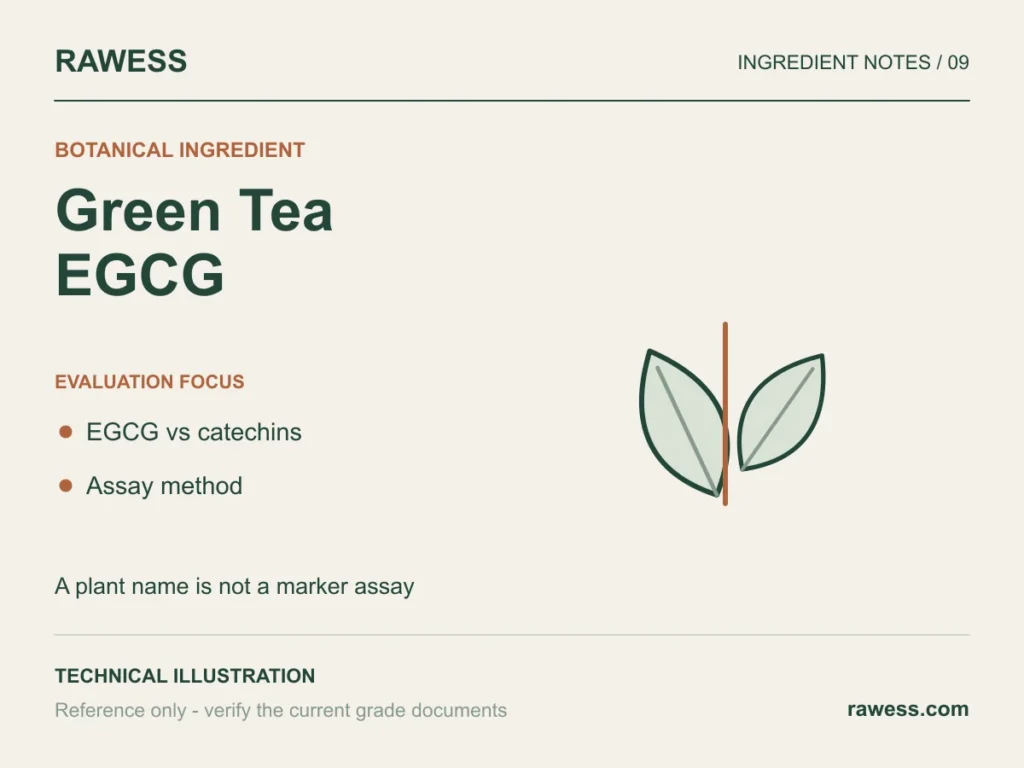 Confirm current availabilityBotanicals
Green Tea EGCG
Epigallocatechin Gallate · CAS 989-51-5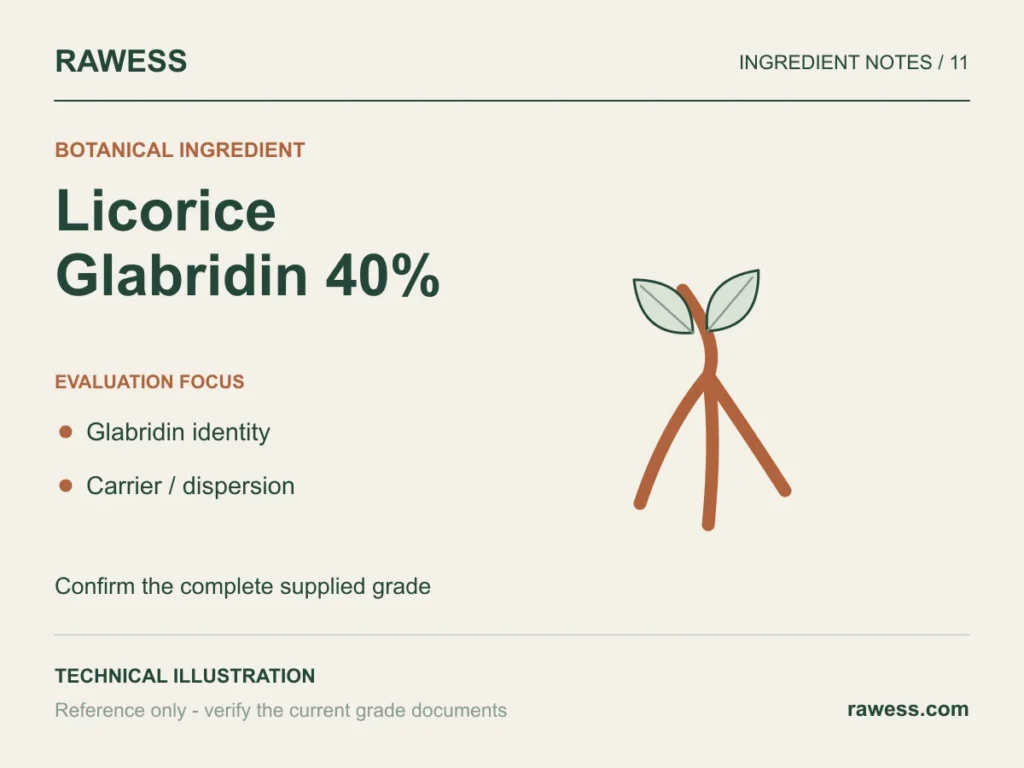 Confirm current availabilityBotanicals
Licorice Glabridin 40%
Glycyrrhiza Glabra Root Extract · CAS 59870-77-6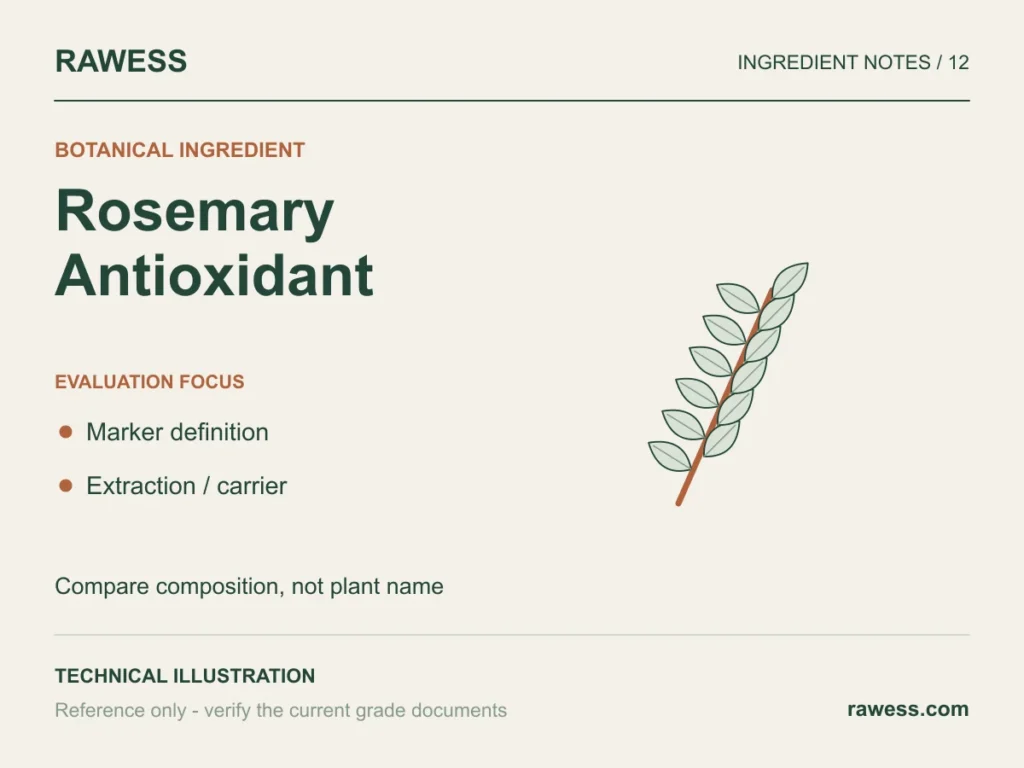 Confirm current availabilityBotanicals
Rosemary Antioxidant
Rosmarinus Officinalis Leaf Extract · CAS 84604-14-8How to source
Choose the extract by marker & claim.
The claim lives in the marker. Standardized extracts mean the active is quantified on every drum, not "typical values" — the difference between a decorated COA and a defensible dossier.
Centella asiatica 90% madecassoside for soothing, barrier-supporting and cica positioning in serums and creams.
Green tea EGCG 98% and licorice glabridin 40% for antioxidant and pigment-focused claims — HPLC quantified by marker.
Rosemary antioxidant (CO₂ extract) protects oils and butters against oxidation — a natural functional alternative for preserve-clean formats.
Purchasing questions
Use these answers to prepare qualification and quotation requests. Availability of documents, certifications and commercial options must be confirmed for the offered grade and order.
Does a botanical extract ratio establish marker content?
No. Compare plant species and part, extraction solvent, carrier, specified markers, assay methods and relevant pesticide or solvent residues. A 10:1 ratio and a marker assay describe different attributes. Ingredient Knowledge Center
Which specification, INCI and CAS identify the grade I am buying?
Match the full supplied composition, INCI, CAS where applicable, physical form and current specification to the quotation. A blend may contain carriers, preservatives or salts. An INCI name alone does not establish concentration, branded origin or interchangeability. Quality and document review
What purity or active content applies, and is the grade USP, EP, JP or FCC?
Ask for the assay method, units and basis: dry basis, as supplied, chromatographic purity or marker content. A product name or typical value does not prove monograph compliance. Specify the required pharmacopoeia and edition, then request evidence for the offered grade and lot. Quality and document review
Will the supplied batch have a COA with assay, metals and microbiological limits?
Request the lot-specific COA before release and agree the required identity, assay, impurities, heavy metals and microbiological tests. Check actual results, units, methods and acceptance limits; test panels differ by grade. A specification, SDS, TDS or product PDF cannot replace batch analytical results. Quality and document review
What pH, temperature, light and storage stability data should I request?
Ask for grade-specific TDS guidance and any stability data with test conditions, packaging and acceptance criteria. Raw-material shelf life does not establish stability in your formulation. Evaluate processing heat, pH, light, oxygen and packaging in the finished product under your proposed conditions. Ingredient Knowledge Center
Is this grade vegan or cruelty-free, and which allergen information is available?
Request separate, dated statements for animal-derived inputs, processing aids, animal-testing policy and allergen content or carry-over. Confirm the scope, site and supplied composition. For EU fragrance-allergen assessment, use the applicable expanded Annex III requirements, not only an older 26-allergen checklist. These claims cannot be assumed across the portfolio. Ingredient Knowledge Center · EU fragrance-allergen amendment
Can you provide COSMOS, Ecocert, ISO 9001 or ISO 22716 evidence?
Request the current certificate, holder, site, scope and expiry date for the proposed material or facility. Ingredient approval, an organic certificate and a site management-system certificate serve different purposes. Do not treat a logo or portfolio statement as certification of every ingredient. Quality and document review
Can ingredient efficacy or clinical data support my finished-product claims?
Ask which reports are available and compare material identity, concentration, route, formulation, population and endpoints. In-vitro, oral and topical clinical evidence are not interchangeable. Published research on another material does not prove efficacy of the supplied lot or your formula. Substantiate finished-product claims with relevant evidence. Ingredient Knowledge Center · EU common criteria for cosmetic claims
Selection knowledge and product documents
A plant name and a marker percentage are not enough to compare cosmetic botanical extracts. Standardization needs a clear marker definition, analytical method and description of the rest of the supplied material.
Botanical Extract Standardization: A Buyer’s Guide · Download product PDFs · Ingredient Knowledge Center
Technical reading: Botanical Marker Assay vs Extract Ratio
Botanical Marker Assay vs Extract Ratio — A 10:1 extract ratio and a named-marker percentage answer different questions; compare identity and analytical basis before choosing a botanical ingredient.
Standardize a botanical before comparing an extract ratio
Two botanical extracts can share an INCI name and still differ by species, plant part, extraction solvent, native ratio, carrier and marker basis. Record those inputs with moisture, microbial, pesticide and residual-solvent checks before comparing a quoted percentage.
- Centella Asiatica 90%: link plant identity and part to madecassoside/asiaticoside ratios, moisture, pesticides and microbiology.
- Green Tea EGCG: compare EGCG and total catechins with caffeine, moisture, light/oxygen exposure and packaging.
- Licorice Glabridin 40%: verify glabridin, glycyrrhizin, supplied form, dispersion method and the solvent basis.
- Rosemary Antioxidant: record total phenolics, carnosic acid, CO₂ extraction, oil solubility and oxygen protection.
Use the botanical marker and extract-ratio guide, the raw-material technical data checklist and the COA/SDS/TDS comparison to write a grade-specific request. Confirm storage and formulation behavior with the stability and solubility guides.